
ChatGPT Apps for Ecommerce Teams
A research-backed look at how ecommerce companies are using ChatGPT apps for product discovery, price comparison, wholesale sourcing, and trade-in workflows.
Ecommerce companies are already using ChatGPT apps. Just not in the vague "AI shopping assistant" way people usually picture.
In the current ChatGPT app ecosystem, the strongest ecommerce patterns are much narrower: product discovery and price comparison, wholesale assortment discovery, and trade-in or resale flows. And OpenAI's latest commerce updates make that direction even clearer. As of March 24, 2026, OpenAI is pushing harder on richer product discovery in ChatGPT, side-by-side comparison, and merchant-owned experiences, not on forcing every brand into a full storefront inside chat (OpenAI).
From a build perspective, that usually means one of two things: a ChatGPT app that exposes MCP-backed tools for a narrow commerce workflow, or a deeper merchant integration built on OpenAI's newer commerce infrastructure. The user-facing pattern is similar either way. ChatGPT captures messy intent, merchant systems return structured commerce data, and the app turns that into a clearer next decision.
So if you're trying to figure out where ChatGPT apps fit in ecommerce, the short answer is this: they work best when the user is still deciding, not when the transaction is already fully specified. If you want the broader strategy context first, read Use Cases of ChatGPT Apps for Business and How ChatGPT Apps Fit Into Your Business.
Where ecommerce companies are actually using ChatGPT apps right now
Looking at the current ChatGPT app directory plus OpenAI's commerce announcements, four patterns show up repeatedly:
| Pattern | Real examples | Why it fits chat | Where it usually breaks |
|---|---|---|---|
| Product discovery and price comparison | Klarna Shopping Search, idealo, Cafe24 | Users can describe intent, constraints, and preferences in plain language | Decision support is often thin after the first shortlist |
| Wholesale sourcing | Faire Wholesale | Buyers can ask by trend, category, or store fit instead of navigating a rigid catalog | Margin, MOQ, vendor comparison, and shortlist structure are often weak |
| Trade-in and resale | Recommerce Trade-in | Users start with a fuzzy question and need a fast estimate plus a next step | The workflow often stops before a full in-chat completion path |
| Merchant-owned deeper experiences | Walmart and Instacart in OpenAI's commerce rollout | The brand can bring loyalty, cart, account, and fulfillment context into the experience | This takes deeper integration and stronger trust design |
That pattern lines up with OpenAI's own guidance on what makes an app worthwhile. The useful apps are the ones that clearly know, do, or show something new, instead of trying to port an entire existing product into ChatGPT (OpenAI Developers).
Product discovery is the clearest ecommerce use case
This is the part of ecommerce that fits ChatGPT best today.
Shopping gets annoying when the user knows the problem, but not the exact SKU. They are not typing "SKU 47391 size 10 black." They are typing things like:
- best running shoes for cold weather
- jackets under $300 that do not look too dressy
- gifts for someone who likes ceramics
- skincare for dry, sensitive skin
That is where chat beats filters.
As of March 24, 2026, OpenAI says more people are starting their shopping in ChatGPT to explore, compare, and figure out what to buy. Its product discovery update focuses on visual browsing, side-by-side comparison, and richer product information, with ACP expanding to support discovery rather than just checkout (OpenAI).
In the current app directory, Klarna Shopping Search, idealo, and Cafe24 all lean into that same pattern:
- capture a plain-language shopping prompt
- return visually scannable products
- expose price, merchant, or basic trust signals
- let the user refine the search in follow-up turns
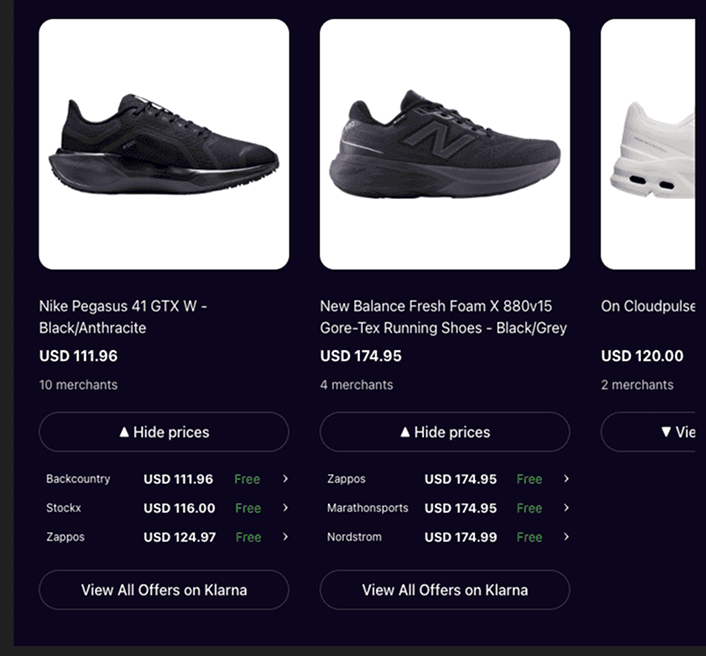
What is interesting is not that these apps can search a catalog. Plenty of systems can do that. The value is that they turn messy, high-intent language into a compact shopping workspace.
That is also why these discovery apps often stop short of being truly great. Search is only half the job. The harder part is helping the user decide:
- why this option is a better fit
- what tradeoff matters most
- which merchant is the safest choice
- whether the user should buy now or keep narrowing
OpenAI's own shopping update makes the same point in a different way. It now talks explicitly about browsing visually, comparing options side by side, and getting detailed, up-to-date information in one place (OpenAI). That is not "search in chat." That is decision support.
Wholesale sourcing is a real B2B commerce use case
This one matters more than most people think.
Ecommerce is not only consumer product search. Merchants, boutique owners, and retail buyers also spend a lot of time figuring out what to stock next. That work is messy in a very ChatGPT-shaped way:
- show me best-selling graphic tees for my store
- find giftable bath products that feel premium but not too expensive
- help me source eco-friendly candles with cozy scents
- show me products that fit a summer assortment refresh
Faire Wholesale is a good example of that pattern. Its app is clearly framed around retailers and boutique owners sourcing inventory from independent brands rather than around consumer checkout.
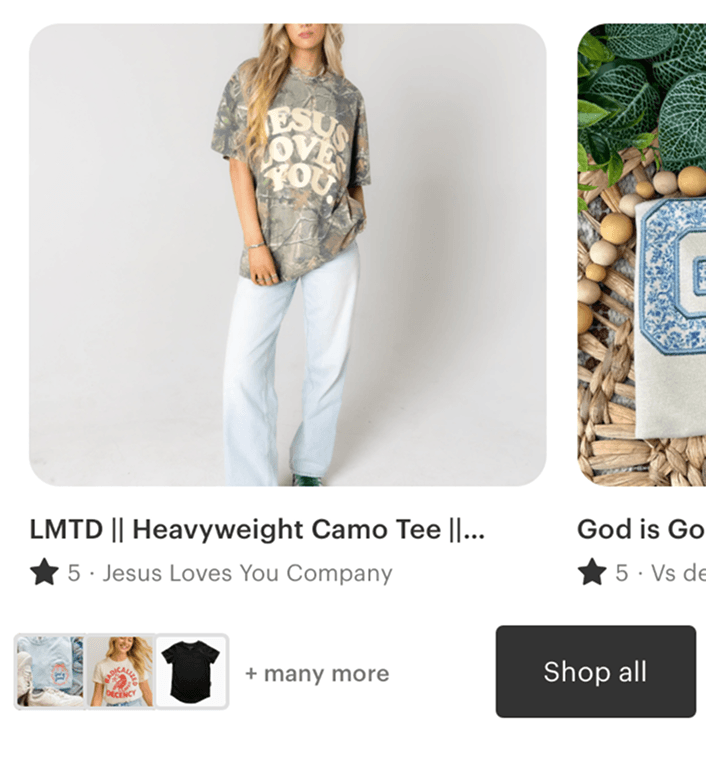
This is a strong use case because sourcing often starts as a fuzzy buying brief, not a strict filter query.
The weak spot is what happens after discovery.
For a business buyer, "show me products" is not enough. They also need:
- price and MOQ context
- vendor credibility
- margin fit
- merchandising fit
- shortlist comparison
So the lesson is not "build a wholesale catalog in ChatGPT." The lesson is: use ChatGPT to turn an imprecise sourcing brief into a more structured buying decision.
If you are deciding whether to build one
The easiest mistake here is copying your storefront into chat.
That is usually the wrong scope. A better move is to pick the one ecommerce decision that still creates friction even when the rest of your stack already exists.
Good next reads:
- Should Your Business Build a ChatGPT App?
- How ChatGPT Apps Fit Into Your Business
- Build Custom ChatGPT Tools with MCP
If the user already has a catalog, checkout, OMS, and support tools, your app should sit at the decision layer, not try to replace the whole commerce stack.
Trade-in and resale flows also fit surprisingly well
Not every ecommerce use case is about buying new inventory.
Trade-in and resale flows are a good fit because they start with ambiguity:
- what device do I actually have
- what is it worth
- is the offer good enough to continue
- what should I do next
Recommerce Trade-in is a clean example. The app guides the user toward the exact device variant, surfaces an estimated trade-in value, and hands off once the user is ready to continue.
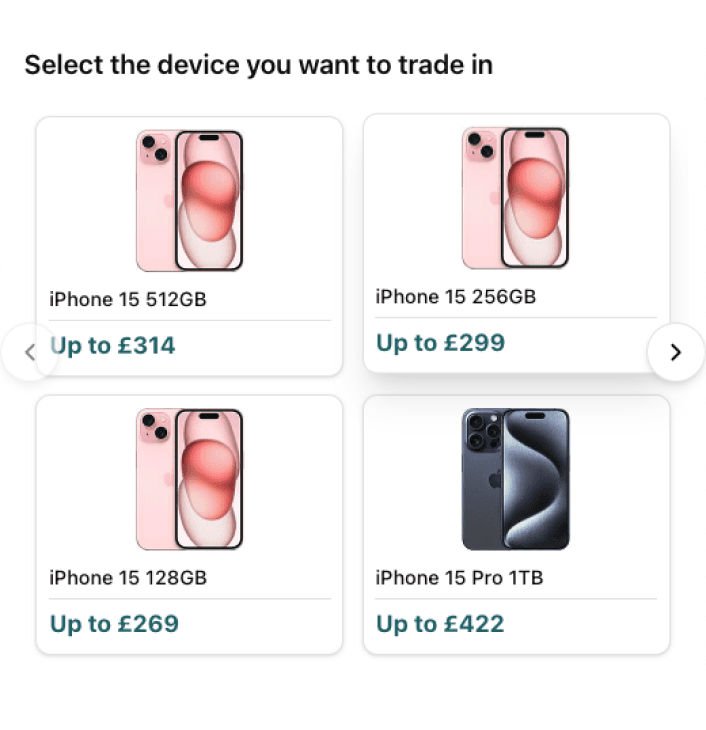
What works here is not the catalog itself. It is the guided narrowing.
The user does not want a giant grid of all phones. They want a quick answer to a very practical question: "What can I get for this thing?" That is a better conversational job than a standard browse-everything storefront.
This is also a good reminder that ecommerce companies should not think only in terms of "product search" and "checkout." Post-purchase, resale, exchange, and circular commerce workflows may actually be easier to scope and easier to prove value on first.
The bigger trend is merchant-owned commerce experiences
This part has moved fast.
On September 29, 2025, OpenAI introduced Instant Checkout and the Agentic Commerce Protocol as the first step toward agentic commerce in ChatGPT. At that point, the message was clear: ChatGPT should not only help people find products, but also help them buy them (OpenAI).
But the important update came later.
On March 24, 2026, OpenAI said it was shifting harder toward product discovery and allowing merchants to use their own checkout experiences while it focused on improving discovery. In the same update, OpenAI said leading retailers including Target, Sephora, Nordstrom, Lowe's, Best Buy, The Home Depot, and Wayfair had already integrated into ACP for discovery, and that Shopify Catalog product data was already integrated into ChatGPT without extra work for individual Shopify merchants (OpenAI).
That is a meaningful signal. It suggests the near-term ecommerce opportunity is broader than "native checkout in chat."
The retailer examples matter too:
- OpenAI said Walmart was introducing an in-ChatGPT app experience tied to a tailored Walmart environment on March 24, 2026 (OpenAI).
- OpenAI said Instacart became the first app to offer a fully integrated grocery shopping and checkout experience in ChatGPT on December 8, 2025 (OpenAI).
So the current picture is not one single model. It is at least two:
- directory-style apps for discovery, comparison, sourcing, or resale
- deeper merchant-owned environments where the brand brings account, loyalty, cart, payment, or fulfillment context into ChatGPT
That second path is harder. But it is probably where the most defensible ecommerce experiences will end up.
What ecommerce teams should build first
If I were choosing a first ChatGPT app for an ecommerce company today, I would start with one of these:
1. High-consideration product discovery
Best for:
- furniture
- beauty
- home goods
- apparel with fuzzy style intent
- electronics with lots of variants
Why it works:
The user starts with constraints and taste, not a finished cart.
2. Structured comparison for a narrow category
Best for:
- running shoes
- skincare routines
- laptops
- travel gear
- mattresses
Why it works:
The app can compress specs, tradeoffs, and merchant options into one decision surface.
3. Wholesale or assortment sourcing
Best for:
- boutiques
- specialty retail
- marketplace sellers
- merchandisers planning seasonal refreshes
Why it works:
Natural-language sourcing is a better fit than rigid category trees when the buying brief is still fuzzy.
4. Trade-in or resale estimation
Best for:
- electronics
- refurbished goods
- circular commerce programs
Why it works:
The chat flow narrows ambiguity fast and gets the user to an estimated value without forcing them through a full web journey first.
5. Merchant-owned support around real buying context
Best for:
- large retailers with strong loyalty, account, and fulfillment infrastructure
- brands that already have reliable product, cart, and customer systems
Why it works:
This is where you can eventually bring discovery, account state, and transaction context together. But it is usually not the best place to start.
What most ecommerce teams get wrong
They build a generic shopping assistant
That sounds exciting and usually ships as something forgettable.
The better question is: which specific ecommerce decision becomes easier in chat than in a filter sidebar or help center?
They treat search as the final answer
Search gets the user candidates. It does not finish the decision.
The apps that feel sticky are the ones that explain fit, surface tradeoffs, and preserve momentum into the next step.
They try to own checkout too early
This is where the March 24, 2026 OpenAI update matters. The public direction is not "every merchant must make checkout native inside ChatGPT right now." It is richer discovery, better merchant data, and more flexibility around the conversion path (OpenAI).
They forget trust signals
Price alone is not enough.
Users need merchant credibility, delivery clarity, return expectations, ratings, and confidence that the product actually fits the prompt they gave.
Summary
Ecommerce companies are already using ChatGPT apps, but the current winners are narrower and more practical than "AI storefront" suggests.
Right now, the strongest patterns are:
- product discovery and comparison
- wholesale sourcing
- trade-in and resale guidance
- deeper merchant-owned environments for companies with stronger commerce infrastructure
As of April 23, 2026, the important strategic takeaway is this: the best ecommerce apps in ChatGPT help users decide, not just browse. They capture messy intent, return structured options, and move the user toward a cleaner next step. That is where the format is strongest.
If you want to map this to your own stack
The best next step is usually not brainstorming features. It is picking one commerce workflow with:
- fuzzy user intent
- important tradeoffs
- live merchant context
- a clear next action
If you want help pressure-testing that scope, start here:
- Use Cases of ChatGPT Apps for Business
- Building MCP Tools with Rich UIs
- How ChatGPT Apps Fit Into Your Business
FAQ
Are ecommerce ChatGPT apps mostly about search right now?
Mostly, yes. As of March 24, 2026, OpenAI's public commerce push emphasizes richer product discovery, comparison, and merchant-connected product data. Native checkout exists, but discovery and decision support are the more common and more scalable starting points today.
What is the best first ChatGPT app for an ecommerce company?
Usually a narrow, high-intent workflow: product discovery for a tricky catalog, a comparison assistant for a complex category, wholesale sourcing, or a trade-in estimator. Those are easier to scope and easier to measure than a full storefront clone.
Do ecommerce companies need checkout inside ChatGPT on day one?
No. OpenAI explicitly says merchants can use their own checkout experiences while it focuses on product discovery. For many brands, better comparison, trust signals, and merchant context will create more value than moving payment into chat immediately.
Can B2B ecommerce use ChatGPT apps too?
Yes. Wholesale sourcing is one of the clearest examples. Faire Wholesale is a good reminder that "ecommerce" in ChatGPT is not only about consumer purchase flows; it also includes retail buying, assortment planning, and vendor discovery.
Should one app handle every ecommerce workflow?
Usually not. Discovery, sourcing, trade-in, support, and checkout all have different trust and data requirements. A narrower app with one strong job to be done is usually easier for users to understand and easier for the model to invoke correctly.
Get the Builder Brief
Weekly tactical notes on shipping ChatGPT apps, MCP integrations, and product-led distribution.