Free
Build and publish your first app end to end.
Freeduring beta
- 3 apps
- 10K requests per month
- All supported AI clients
Start free during beta, ship the first real workflow, and only move up once branding, analytics, auth, and rollout support start to matter.
Most teams should begin on the free beta and move up only when the app needs stronger branding, analytics, auth, or rollout controls.
Build and publish your first app end to end.
For teams shipping their first real business app.
For broader rollout, stronger controls, and support.
For governed deployments with SSO, audit trails, and on-prem requirements.
A concise launch checklist for SaaS and platform teams turning MCP servers into ChatGPT apps people can actually adopt.
Enpal, Early beta tester. AI search is becoming part of the buyer journey. The valuable part is not just showing up there, it is having a controlled way to answer, qualify, and move the user forward.
A useful app is not just a prompt with a button. It needs live business data, the right actions, and in-chat UI people can actually use.
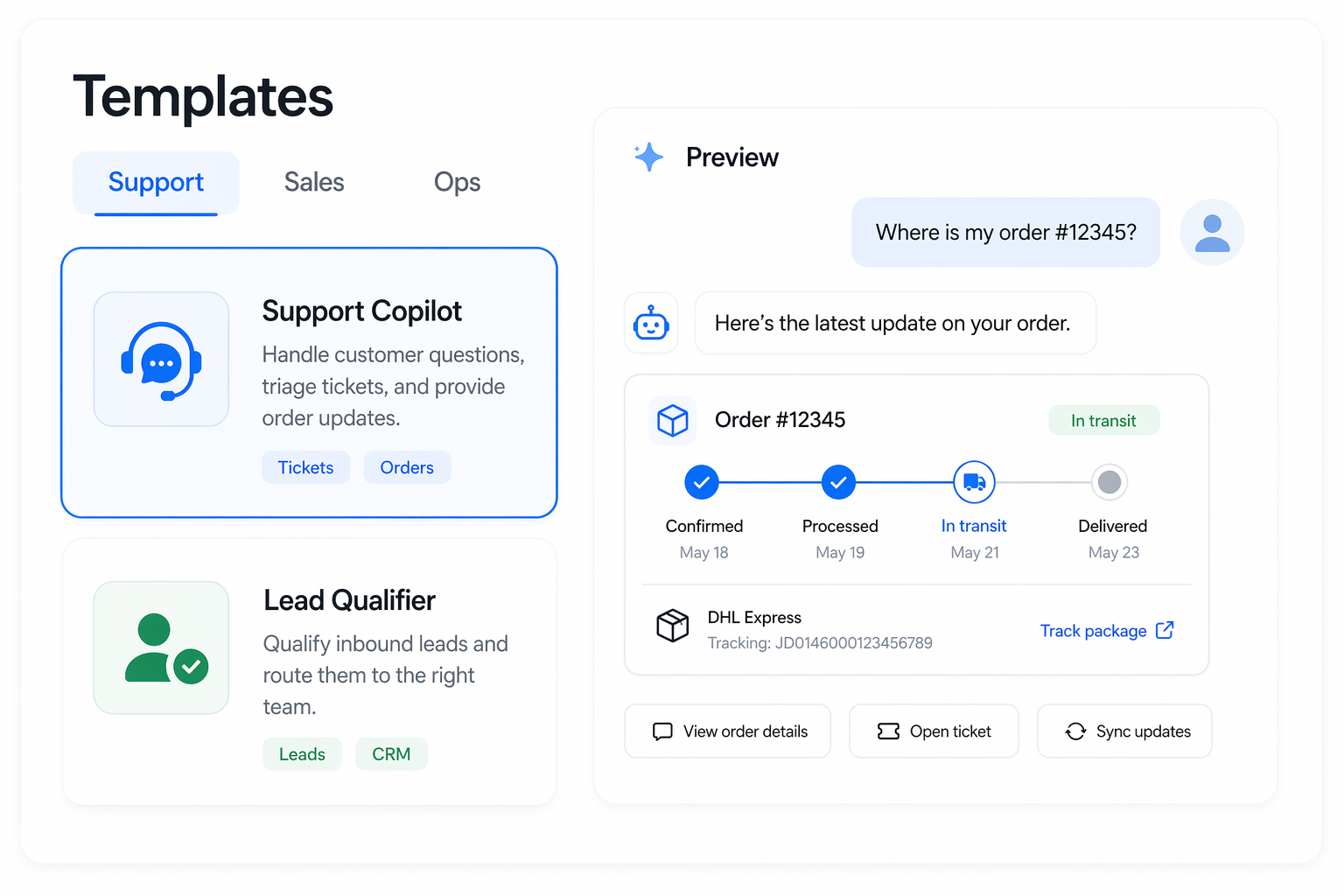
Begin with a template for support, sales, ops, analytics, or internal workflows instead of a blank canvas.
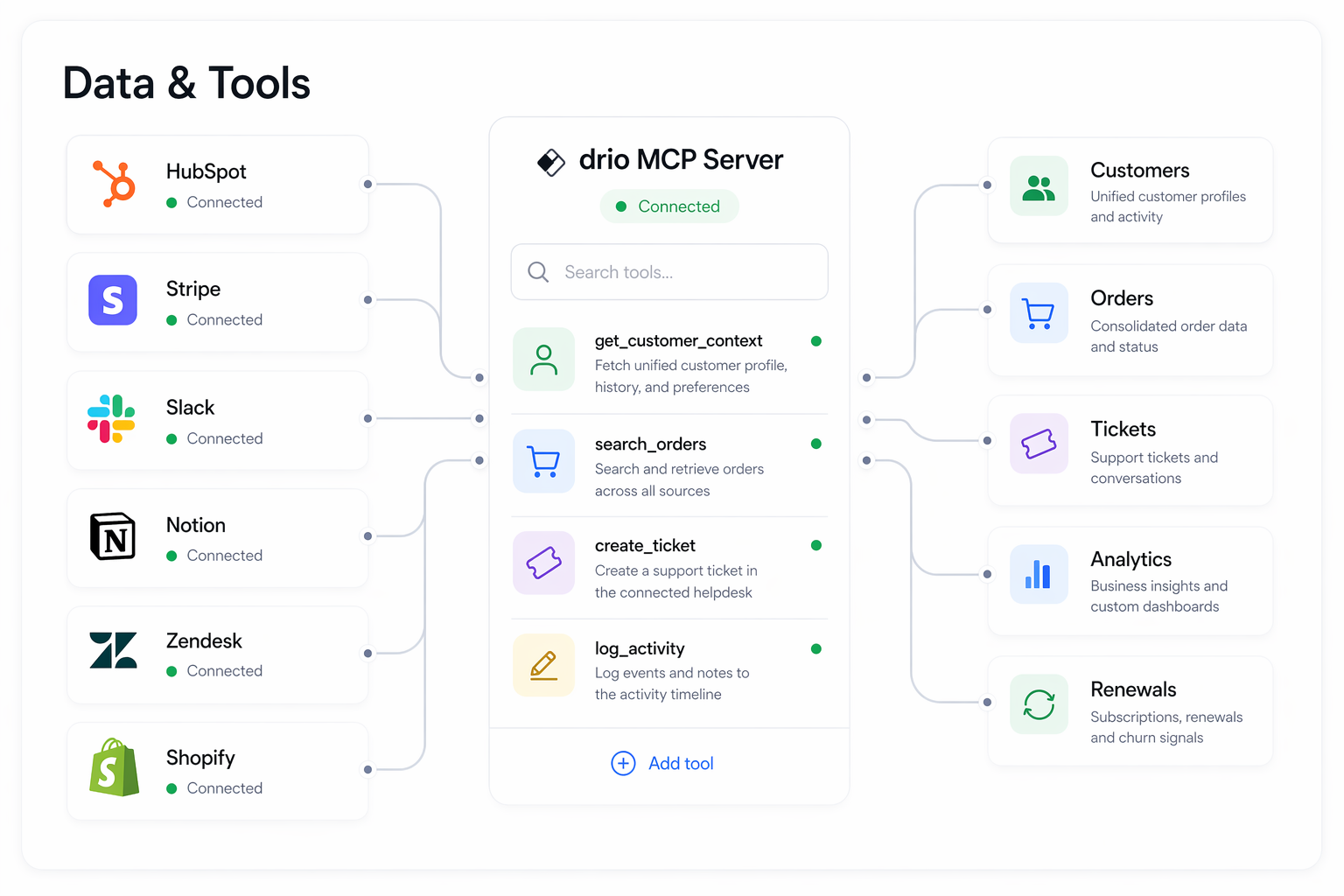
Pull in data and actions from your APIs and business tools so the app stays current, useful, and grounded in live context.
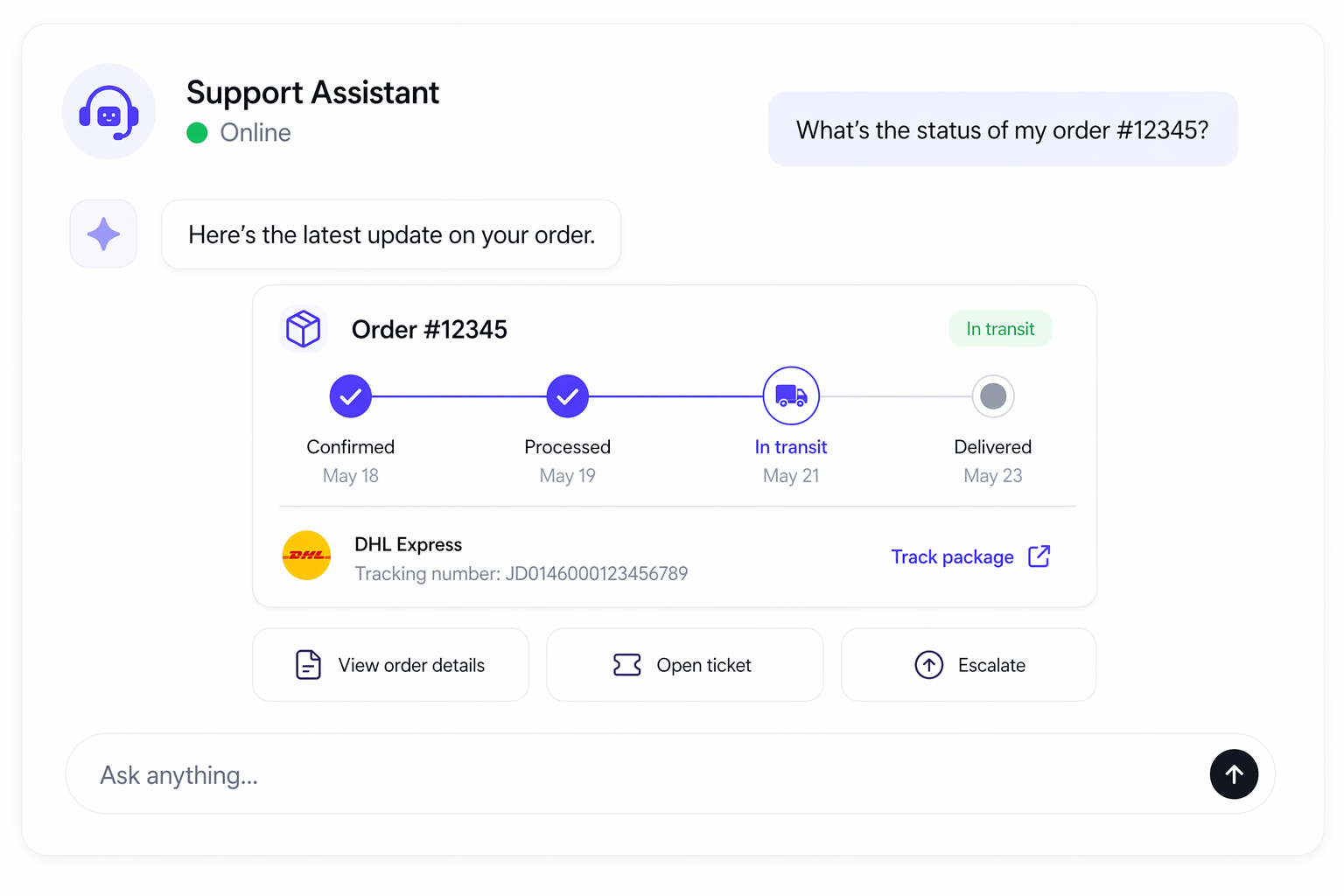
Use forms, tables, charts, product views, and trackers so people can do the next step, not just read a response.
These are the questions we expect from operators, product teams, and technical reviewers before they commit.
Yes. drio is free during beta so teams can ship a real first app before pricing becomes the blocker. The ladder on this page shows how packaging is expected to evolve once branding, analytics, auth, and rollout needs become more serious.
drio is strongest for ops, product, RevOps, support, and founder-led teams that want AI-builder speed without falling into generated-code chaos. It is especially useful when the workflow needs real data, actions, permissions, and a cleaner path to production than a prompt-only tool gives you.
Most teams can stay on the free beta while they prove the workflow and ship the first version. Higher tiers start to matter when you want custom branding, analytics, stronger auth controls, more apps, or more structured rollout support across a team.
Yes. drio is designed to work with custom APIs, OpenAPI-described services, and upstream MCP systems. The higher tiers are less about whether you can connect them and more about the controls, support, and governance you want around those connections.
That is where the Enterprise path makes sense. It is meant for teams that expect a real security review, need controlled access by role, or want deployment and support options that fit stricter internal requirements.
Not usually. Many of the best early use cases come from the teams closest to the workflow. Engineering becomes most valuable when you want to standardize access patterns, pass security review faster, or support a broader company rollout.
Yes. Many teams start with ChatGPT because that is where user demand already exists, then expand to other supported AI clients as the rollout grows. The pricing path is meant to support that progression rather than forcing a custom rebuild too early.
drio is meant for real workflows that need connected systems, structured UI, and actions inside chat. It is not just a wrapper for text responses or a one-off demo generator. The strongest use cases are support, sales, operations, internal tooling, and other repeatable business flows.
A free gap report, built from your own AI-search footprint. No retainer — you only pay per booked lead.